Showing posts with label series. Show all posts

Saturday, 1 June 2013

"The Hobbit" by J. R. R. Tolkien

The Hobbit by J. R. R. Tolkien
London : Harper Collins, 1995.
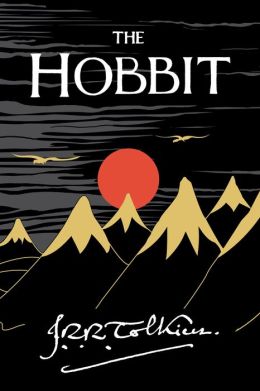

Credit: Barnes & Noble
The "father of modern fantasy literature", Tolkien's prequel to his hugely successful and popular Lord of the Rings trilogy, The Hobbit, features characters and story lines that are just as complex as the original trilogy.  The Hobbit follows a band of adventurers - twelve dwarves, one hobbit and a wizard - through their quest to recapture their stolen mountain home.  Testaments of friendship, bravery and courage are forged and the bonds of dwarfhood are tested and strengthened.  Tolkien's Middle Earth is expanded upon and becomes real through his narrative genius and lyrical prose.

However, while a number of protagonists feature in the novel, the character of Thorin, the Dwarven Prince, showcases several features of an anti hero.  Thorin is rude, stately and formal and sets out on this adventure with one goal in mind: reclaim the legendary Lonely Mountain and seek revenge for the ravage of Durin at the hand of the dragon, Smaug.  Thorin is single minded in his approach and does not care much for the involvement or use of the hobbit, Bilbo Baggins.  However, while Thorin is cold and calculating he cares a lot for his dwarven companions and is a natural leader.  He is not fond of fairy or fairyfolk but is not above using them, and to an extent Bilbo,  for his own personal vendetta.

The Hobbit is the prequel to the legendary "Lord of the Rings" trilogy by J. R. R. Tolkien.  Other novels in the series include: The Fellowship of the Ring  (1954), The Two Towers (1954) and The Return of the King (1955).  The Hobbit has also been adapted into a film trilogy by Peter Jackson, the same director of the "Lord of the Rings" movie trilogy, which will be released sequentially from 2012 to 2014.


Thursday, 30 May 2013

"A Game of Thrones" by G. R. R. Martin

A Game of Thrones by G. R. R. Martin
New York : Bantam Books, 1996.


Credit: Eat, Run, Read
Probably one of the best examples of complex and multifaceted world building ever seen in literature, second only to Tolkien's Middle Earth, Martin's A Game of Thrones kicks off a ruthless medieval-esque power struggle for the illustrious Iron Throne.  The book is broken up into various point of views from a variety of characters, most of which are never entirely heroic nor entirely villainous - a cast of anti heroes.

At every turn of the page we are met with dubious characters with perceptively "golden" intentions, no one character is above using less-than-pure means to achieve an end.  This is just the first book in the epic series and as the story progresses more and more characters are faced with tough decisions which ultimately sully their "heroic" facade.  Martin's narrative is also somewhat unique as a percentage of the anti heroes are female, capable heroines trying to stay alive in a world where they are viewed as second-class citizens, incapable of making any sort of rational decisions.  Anti heroes to take heed of: Arya Stark; Daenerys (Dany) Targaryen; Melisandre (introduced in A Clash of Kings); and Tyrion Lannister.

A Game of Thrones is the first book in the "A Song of Ice and Fire" series written by G. R. R. Martin.  Other novels in the series include: A Clash of Kings (1998), A Storm of Swords (2000), A Feast for Crows (2005), A Dance with Dragons (2011) and The Winds of Winter (date unknown).  This series is still ongoing.  As of 2011, this series has also been adapted into a miniseries by HBO titled Game of Thrones and is in its third season with a four season expected to be aired in 2014.


Tuesday, 21 May 2013

"Neuromancer" by William Gibson

Neuromancer by William Gibson
New York : Ace Books, 1984.


Credit: 101 Books
The definitive science fiction novel which rockets the reader through the streets of Chiba City, Japan, following the misadventures of the drug addict computer hacker, Case.  The top of his field, Case was sabotaged by his previous employers after he was caught stealing from them.  Injected with a poisonous mycotoxin, Case finds himself without his supreme hacking abilities and his only release from the hyper technologically advanced world he was born in.  However, in a strange turn of events, Case is offered a last run offer: Case's hacking skills in exchange for a mycotoxin cure.

Case is selfish, egotistical, single-minded and carefree.  He is out to help himself and only accepts the job offer to regain his hacking abilities, which would ultimately serve his own selfish purposes: he wants access to the Matrix, a global computer network, in order to exact his revenge and reclaim his title.  Although he possessed dubious ambitions, Case is not the villain of the piece and serves as a pawn in a much larger picture.

Neuromancer is the first novel in the trilogy by William Gibson.  Other novels in this series include: Count Zero (1986) and Mona Lisa Overdrive (1988).  A series of novellas featuring other adventures in the Matrix are also available, also written by Gibson.


Saturday, 27 April 2013

"Ender's Game" by Orson Scott Card

Ender's Game by Orson Scott Card
London : Orbit, 2011.


Credit: Tor.com
Ender Wiggin is the main character in the primary novel of the Ender's Saga series.  A child prodigy, Ender is, quite plainly, a genius and the world's rising star in the field of military and strategy gaming.  However, for all his intellectual prestige, he is looked down upon for being a "Third" - the third child born in a family in a strictly two-child only society - and is considered a social miscreant.  Due to this trait, and his genius, Ender is the target of excessive bullying, at school, home, and later at the Battle Academy.  It is an amalgamation of these factors which draws Ender into becoming a cold, calculating strategic entity.

Ender's Game is a darkly psychological sci-fi narrative and follows Ender's progression into the Battle School and his subsequent early graduation into the prestigious Command School.  Throughout the novel, the reader is open to Ender's thoughts and quirks and while he is portrayed innocently enough, it is not until the climax and end of the book that the reader completely comes to terms with Ender's actions - actions which are not revealed to the reader, or Ender, until the conclusion of the book.

Ender is in a similar league to that of Artemis Fowl: both are prodigies of their time; highly strategic and cunning; have a lack of friend-type figures; and are both used for a greater purpose.  However, in Ender's case, his antihero story is told in reverse: he is perceived from the get-go as the noble and powerful hero, a leader of his time.  This image falters and changes throughout the course of the text and the "twist", which is simultaneously revealed to both the reader and Ender, casts a dark cloud over Ender's character.


The title of the novel is an incredibly rich piece of foreshadowing: Ender's Game.

Ender's Game is the first book in a saga series of five books which follow Ender's story.  Other novels in the series include: Speaker for the Dead (1986), Xenocide (1991), Children of the Mind (1996) and Ender in Exile (2008).

Thursday, 25 April 2013

"Harry Potter and the Half Blood Prince" by J. K. Rowling

Harry Potter and the Half Blood Prince by J. K. Rowling
Sydney: Bloomsbury, 2005.


Credit: Dymocks.com
One of the most popular book series in history, J. K. Rowling's Harry Potter series hosts a plethora of different characters, including several heroes, villains and even a couple of antiheroes.  The character of Severus Snape - for all his dubious purpose, a fan favourite - is the pivotal antihero in the Potter series.  The narrative follows the orphan boy, Harry Potter, and his adventures at the magical boarding school, Hogwarts, and the evil plans that get thrown in his path during his time.

This is the typical bildungsroman narrative, following the not-yet hero, Harry, and his trusty cohorts and best friends, Hermione Granger and Ron Weasley.  Harry's life is made difficult by his personal history and legacy, and is consistently (well, in his eyes) antagonised by a teacher, Professor Severus Snape.  Half Blood Prince is the sixth book in the series and offers, for the first time, a rare glimpse into the past.

Rowling's writing is subtle and cunning; Snape is introduced in the first book of the series, Philosopher's Stone (Sorcerer's Stone in the U.S.), and is consistently perceived to be a "bad" character.  However, it is not until the sixth book that Snape's true character is explored, with his history and intimate connection to Harry's mother, revealed for the first time.  All these factors culminate in the seventh and final book, Harry Potter and the Deathly Hallows, where Snape's true motives are revealed and he is solidified in the antihero history books.  Snape is one of the antiheroes in the text and is portrayed as a dubious and vile character throughout the progress of the story.  The other antihero, Draco Malfoy, and his antagonistic relationship with the protagonist, Harry, strongly mirrors the relationship faced by Harry's father, James Potter, and Snape in their adolescent years.

However, it should be noted, that while Snape's back story presents a brief glimpse into why and how he became the man he was in Harry's life, it does not completely exonerate him for all the petty, childish and downright bitter acts of cruelty he inflicted on others in his path to martyrdom.

Harry Potter and the Half Blood Prince is the sixth novel in the series of seven by J. K. Rowling, all of which follow the young wizard, Harry Potter, and his fight against the evil Lord Voldemort (He Who Must Not Be Named).  Other novels in this series include: Harry Potter and the Philosopher's Stone (1997), Harry Potter and the Chamber of Secrets (1998), Harry Potter and the Prisoner of Azkaban (1999), Harry Potter and the Goblet of Fire (2000), Harry Potter and the Order of the Phoenix (2003) and Harry Potter and the Deathly Hallows (2007).

Tuesday, 26 March 2013

"Artemis Fowl" by Eoin Colfer

Artemis Fowl by Eoin Colfer
New York: Hyperion books, 2001.


Credit: ArtemisFowl.com
Teenage genius, Artemis Fowl, second of his name, along with his protector and bodyguard, Butler, kidnaps and ransoms the fairy enforcement officer, Holly Short, in order to reveal the hidden society of paranormal entities hidden away from human eyes and win a horde of gold in the process.  Colfer’s criminal mastermind is a lush and complex character that starkly contrasts against the heroes of the same genre.  He is brash, sarcastic, witty, pessimistic and apathetic to others, striving only to achieve his ends and his means.  Bored with the world, Fowl sets to raise hell, not only in our world, but also the world of shadows.

Colfer sends his readers, largely male pre-teens, on a worldwide chase with Artemis to bring about anarchy and get his gold ransom.  However, as the novel progresses, Artemis’ motives are questioned and the real reason behind his so called evil is revealed - and it strongly contrasts with the morally bankrupt individual he is portrayed as.  Artemis plays the dual role of the antagonist and the protagonist and is a wonderfully complex character for both teenage and adult readers.

Artemis presents readers with a literary challenge: the world is not as monochromatic as it seems and the concepts of “good” and “evil” are archaic and unrealistic.  This is absolutely seen in the climax of the novel when the fairies, the seemingly “good” characters, attempt to release a biological weapon in Artemis’ property in order to steal back their much-loved gold.

Artemis Fowl is the first novel in a series of eight by Eoin Colfer, all of which follow the adventures and misadventures of the teenage protagonist.  Other novels in this series include: Artemis Fowl: The Arctic Incident (2002), Artemis Fowl: The Eternity Code (2003), Artemis Fowl: The Opal Deception (2005), Artemis Fowl: The Lost Colony (2006), Artemis Fowl: The Time Paradox (2006), Artemis Fowl: The Atlantis Complex (2010) and Artemis Fowl: The Last Guardian (2012).