Showing posts with label primary character. Show all posts

Friday, 7 June 2013

"The Amulet of Samarkand" by Jonathan Stroud

The Amulet of Samarkand by Jonathan Stroud
London : DoubleDay, 2003.


Credit: Good to Read
Another fantasy series boasting a wide character list of anti heroes.  Set in an alternate universe, one where magic and science co-exist (to a degree), and focuses on the story of the magic-infused youth, Nathaniel, and his quest to harness the massive power of the mythical djinni.  Nathaniel succeeds in acquiring the Amulet of Samarkand from a rival apprentice and summons the djinni, Bartimaeus, and is granted power over it.  However, due to a slip of the tongue, Bartimaeus discovers his master's true name and the power balance between the two shifts.  Both these characters serve as primary protagonists and are both the major anti heroes of the series.

The Amulet of Samarkand continues on to see the rise of a powerful, ancient magic and the unification of two rival forces.  It's full of intrigue, mystery and magic.

The Amuletof Samarkand is the first book in the Bartimaeus trilogy by Jonathan Stroud.  Other books in this series include: The Golem's Eye (2004) and Ptolemy's Gate (2005).


Thursday, 6 June 2013

"Paradise Lost" by John Milton

Paradise Lost by John Milton
New York : Odyssey Press, 1962.


Credit: Beyond Hollywood
The epic twelve-part poem written by John Milton in the 17th century which follows the story of the Morning Star's descent from Heaven.  This is considered to be Milton's major work and is the source of much controversy and discussion.  The principle character in the poem, the Morning Star - Satan - is the tragic hero of Heaven who eventually falls to Earth for his sins against God and his creation.

Milton's Satan is is a tragic Byronic hero who ultimately chooses to go against God in an act of rebellion.  Satan follows the usual anti hero narrative story arc - a favoured and trusted angel, the most beautiful of his kind, who would give everything for his ruler, God, who ultimately sacrifices his position to rule Hell - which tracks the untimely destruction of his position.  It is Milton's Satan is largely considered to be a modern counterpart of the heroes of classical Greek literature.

Milton's Satan is a very real and jarring character foiled by his own hubris and pride.


Tuesday, 4 June 2013

"The Blade Itself" by Joe Abercrombie

The Blade Itself by Joe Abercrombie
London : Gollancz, 2006.


Credit: Fantasy Faction
Blood thirsty, squalid and decrepit are probably the best words to describe this dark high fantasy adventure novel.  Every character - every last one of them - are anti heroes.  There are no heroes in this world, only the incredibly villainous antagonists and the sarcastic, biting (and only slightly villainous) anti heroes.  This book is full of flawed characters, each with their own distinct stories and histories, each as complex as the next.

The novel follows half a dozen point of views, a number of which are forced to work together, bound by the laws of magic.  The highlights of this series are the main anti heroes of the story: Logen Ninefingers:  barbaric savage, a legendary warrior and fighter perceived by his own men to be dead, who is hiding an incredibly sinister and feral alter ego; Ferro Maljinn: a bitter ex-slave with an untapped well of magic trapped inside her, unwillingly brought on the grand journey by a scheming, vague wizard; Sand dan Glokta: the once prodigal son of the kingdom now embittered, crippled torturer; and Bayaz: the only remaining wizard in the world, readily able to use others as pawns in his plans to bring magic back into the world.  Thoroughly complex, cynical and darkly humour, every character brings their own individual sort of flavour to this bleak and war-striken world.

The Blade Itself is the first book in the The First Law fantasy series written by Joe Abercrombie.  Other novels in the series include: Before They Are Hanged (2007) and Last Argument of Kings (2008).


Sunday, 2 June 2013

"Darkly Dreaming Dexter" by Jeff Lindsay

Darkly Dreaming Dexter by Jeff Lindsay
Maine : Thorndike Press, 2004.


Credit: Between the Covers
By day, Dexter Morgan works for the Miami Police Department as a forensic analyst specialising in blood splatter analysis.  By night, Dexter is a vigilante serial killer targeting any and all killers, rapists and criminals who have escaped justice, according to the voice in his head, the "Dark Passenger".  Don't get this wrong - Dexter isn't a bad guy, he's just doing what he believes to be right.

Dexter is probably the tantamount example of a literary anti hero.  He has a job in the police department, helping track down killers and find justice for his victims; he doesn't hurt innocents.  However, his method of dishing out justice couldn't be more sinister and Dexter is, essentially, the thing he hunts.  However, while Dexter is a serial killer (of serial killers) he is genuinely a nice guy ... if mostly disturbed.  Dexter is darkly witty and viciously honest and scarily normal (in most respects).

Darkly Dreaming Dexter is the first novel of a series of seven which follows the twisted tale of Dexter Morgan.  Other novels in the series include: Dearly Devoted Dexter (2005), Dexter in the Dark (2007), Dexter by Design (2009), Dexter is Delicious (2010), Double Dexter (2011) and Dexter's Final Cut (date unknown).


Saturday, 1 June 2013

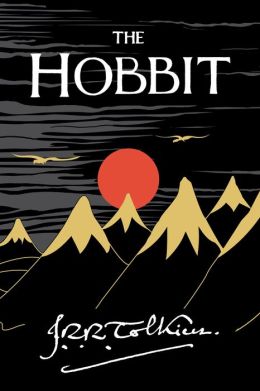
"The Hobbit" by J. R. R. Tolkien

The Hobbit by J. R. R. Tolkien
London : Harper Collins, 1995.


Credit: Barnes & Noble
The "father of modern fantasy literature", Tolkien's prequel to his hugely successful and popular Lord of the Rings trilogy, The Hobbit, features characters and story lines that are just as complex as the original trilogy.  The Hobbit follows a band of adventurers - twelve dwarves, one hobbit and a wizard - through their quest to recapture their stolen mountain home.  Testaments of friendship, bravery and courage are forged and the bonds of dwarfhood are tested and strengthened.  Tolkien's Middle Earth is expanded upon and becomes real through his narrative genius and lyrical prose.

However, while a number of protagonists feature in the novel, the character of Thorin, the Dwarven Prince, showcases several features of an anti hero.  Thorin is rude, stately and formal and sets out on this adventure with one goal in mind: reclaim the legendary Lonely Mountain and seek revenge for the ravage of Durin at the hand of the dragon, Smaug.  Thorin is single minded in his approach and does not care much for the involvement or use of the hobbit, Bilbo Baggins.  However, while Thorin is cold and calculating he cares a lot for his dwarven companions and is a natural leader.  He is not fond of fairy or fairyfolk but is not above using them, and to an extent Bilbo,  for his own personal vendetta.

The Hobbit is the prequel to the legendary "Lord of the Rings" trilogy by J. R. R. Tolkien.  Other novels in the series include: The Fellowship of the Ring  (1954), The Two Towers (1954) and The Return of the King (1955).  The Hobbit has also been adapted into a film trilogy by Peter Jackson, the same director of the "Lord of the Rings" movie trilogy, which will be released sequentially from 2012 to 2014.


Thursday, 30 May 2013

"A Game of Thrones" by G. R. R. Martin

A Game of Thrones by G. R. R. Martin
New York : Bantam Books, 1996.


Credit: Eat, Run, Read
Probably one of the best examples of complex and multifaceted world building ever seen in literature, second only to Tolkien's Middle Earth, Martin's A Game of Thrones kicks off a ruthless medieval-esque power struggle for the illustrious Iron Throne.  The book is broken up into various point of views from a variety of characters, most of which are never entirely heroic nor entirely villainous - a cast of anti heroes.

At every turn of the page we are met with dubious characters with perceptively "golden" intentions, no one character is above using less-than-pure means to achieve an end.  This is just the first book in the epic series and as the story progresses more and more characters are faced with tough decisions which ultimately sully their "heroic" facade.  Martin's narrative is also somewhat unique as a percentage of the anti heroes are female, capable heroines trying to stay alive in a world where they are viewed as second-class citizens, incapable of making any sort of rational decisions.  Anti heroes to take heed of: Arya Stark; Daenerys (Dany) Targaryen; Melisandre (introduced in A Clash of Kings); and Tyrion Lannister.

A Game of Thrones is the first book in the "A Song of Ice and Fire" series written by G. R. R. Martin.  Other novels in the series include: A Clash of Kings (1998), A Storm of Swords (2000), A Feast for Crows (2005), A Dance with Dragons (2011) and The Winds of Winter (date unknown).  This series is still ongoing.  As of 2011, this series has also been adapted into a miniseries by HBO titled Game of Thrones and is in its third season with a four season expected to be aired in 2014.


Wednesday, 29 May 2013

"The Penguin Complete Sherlock Holmes" by Sir Arthur Conan Doyle

The Penguin Complete Sherlock Holmes by Sir Arthur Conan Doyle
London : Penguin Books, 2009.


Credit: Fantasy Reviews
The eccentric, bohemian detective, Sherlock Holmes, is probably one of the biggest anti heroes in modern literature.  Often described in a drug addled daze, Holmes is one of England's best detectives and has a knack for piecing together vague clues to form a resolution.  Considered a patriot by some, a nuisance by others, Holmes' ego is unmatched, his personality only softened by his partner, Doctor John Watson.

We first meet Sherlock Holmes in "A Study in Scarlet".  His crime solving adventures have been chronicled in a series of nine to twelve works of fiction, each containing several short stories throughout.

Sherlock Holmes appears in a number of short stories, all written by Sir Arthur Conan Doyle.  Other books in this series includes: The Sign of Four (1890), The Adventures of Sherlock Holmes (1892), The Memoirs of Sherlock Holmes (1894), The Hound of Baskervilles (1901), The Return of Sherlock Holmes (1903), The Valley of Fear (1915), His Last Bow (1913) and The Case Book of Sherlock Holmes (1921). 


Tuesday, 21 May 2013

"Neuromancer" by William Gibson

Neuromancer by William Gibson
New York : Ace Books, 1984.


Credit: 101 Books
The definitive science fiction novel which rockets the reader through the streets of Chiba City, Japan, following the misadventures of the drug addict computer hacker, Case.  The top of his field, Case was sabotaged by his previous employers after he was caught stealing from them.  Injected with a poisonous mycotoxin, Case finds himself without his supreme hacking abilities and his only release from the hyper technologically advanced world he was born in.  However, in a strange turn of events, Case is offered a last run offer: Case's hacking skills in exchange for a mycotoxin cure.

Case is selfish, egotistical, single-minded and carefree.  He is out to help himself and only accepts the job offer to regain his hacking abilities, which would ultimately serve his own selfish purposes: he wants access to the Matrix, a global computer network, in order to exact his revenge and reclaim his title.  Although he possessed dubious ambitions, Case is not the villain of the piece and serves as a pawn in a much larger picture.

Neuromancer is the first novel in the trilogy by William Gibson.  Other novels in this series include: Count Zero (1986) and Mona Lisa Overdrive (1988).  A series of novellas featuring other adventures in the Matrix are also available, also written by Gibson.


Tuesday, 14 May 2013

"Fight Club" by Chuck Palahniuk

Fight Club by Chuck Palahniuk
New York : W. W. Norton & Company Inc., 2005.


Credit: MyBookshelfReview
The first rule of Fight Club is: you do not talk about Fight Club.

The second rule of Fight Club is: you do not talk about Fight Club.

The cult classic book, which was adapted into an equally classic movie starring Brad Pitt and Edward Norton, Fight Club tells the story of the startling story of the unnamed narrator.  Anarchists, soap making and intense black comedy are just some of the things you will find in this story.  

When the Narrator meets Tyler Durden his world changes.  No longer satisfied to stick with his nine-to-five dead end job, in his white business shirts and nondescript ties, the Narrator's new life goal is completely turned on its head.  Tyler is everything the Narrator hopes to be: confident, outgoing, irreverent, brazen and unrestrained.  He is also an anarchic genius intent on bringing down the complacency of Corporate America.  But as the Narrator gets deeper and deeper into Tyler's plans he discovers that everything is not as it seems and even comes to discover new aspects of himself ...

Warning, definitely not for the faint hearted.


Tuesday, 7 May 2013

"Frankenstein" by Mary Shelley

Frankenstein by Mary Shelley
Oxford : Penguin Books Ltd, 2003.


Credit: KnowledgeLost.org
Told in a series of letters from a seaman, Robert Walton, Frankenstein recounts the incredible story relayed to him by the half-mad doctor, Victor Frankenstein.  A story rife with tragedy, misunderstanding, madness and other untold horrors, Frankenstein follows the Doctor's obsessive experimentation using the power of lightning as a regenerative power source.  Frankenstein's monster, which remains unnamed, is wrongly blamed for a number of crimes and is essentially hated by his master and creator, Doctor Frankenstein.

Although Doctor Frankenstein is projected as the ideal and wise Gothic hero, he is in actuality a prime example of the anti hero trope.  Frankenstein uses his knowledge and power to bring to life an eight foot monster, his "own abomination", and is unable to deal with the consequences to his actions.  Due to his actions, people are hurt, and some are killed, while Doctor Frankenstein refuses to own up to his actions and take responsibility for his creation.  He is a classic example of the good intentions hero falling from grace through his actions.  Conversely, while Frankenstein falls from scientific grace we also see the rise of his creation:  a  maliciously clever creation with the capability of outsmarting his maker.

Frankenstein is an darkly adventurous horror story which leaves readers wondering: in this narrative, who is the monster and who is the man?

Thursday, 2 May 2013

"The Secret History" by Donna Tart

The Secret History by Donna Tart
London : Vintage Books, 2004.


Credit: TheTangenital.com
Prepare to meet the first hipsters.  Meet Richard: unhappy, empoverished, incredibly clever and a deadbeat.  In the hopes of beating his supposed future - the failure son of an abusive mechanic father and pessimistic mother - Richard moves to Vermont to study the Classics at Hampden College.  Unfortunately for Richard, he is not cultured or high-born enough to join the elite class, made up of six students and one teacher, but perseveres and soon worms his way into the club.

Wealthy, privileged and voraciously destructive, Richard's new friends - all of them would-be philosophers - are used to the finer things in life.  There's Henry: coldly witty and perfect; his bigoted best friend, Bunny, whom he secretly hates; fraternal twins, Camilla and Charles: blonde, lithe and incredibly close; and the flamboyant Francis.  When select members of the group research and participate in a secret, ancient ritual, all hell breaks loose and the delicate threads of friendship between the six begin to falter.

The friends soon find that secrets and lies are swiftly exposed and that some people would do anything keep their darkest stories hidden.

Saturday, 27 April 2013

"Ender's Game" by Orson Scott Card

Ender's Game by Orson Scott Card
London : Orbit, 2011.


Credit: Tor.com
Ender Wiggin is the main character in the primary novel of the Ender's Saga series.  A child prodigy, Ender is, quite plainly, a genius and the world's rising star in the field of military and strategy gaming.  However, for all his intellectual prestige, he is looked down upon for being a "Third" - the third child born in a family in a strictly two-child only society - and is considered a social miscreant.  Due to this trait, and his genius, Ender is the target of excessive bullying, at school, home, and later at the Battle Academy.  It is an amalgamation of these factors which draws Ender into becoming a cold, calculating strategic entity.

Ender's Game is a darkly psychological sci-fi narrative and follows Ender's progression into the Battle School and his subsequent early graduation into the prestigious Command School.  Throughout the novel, the reader is open to Ender's thoughts and quirks and while he is portrayed innocently enough, it is not until the climax and end of the book that the reader completely comes to terms with Ender's actions - actions which are not revealed to the reader, or Ender, until the conclusion of the book.

Ender is in a similar league to that of Artemis Fowl: both are prodigies of their time; highly strategic and cunning; have a lack of friend-type figures; and are both used for a greater purpose.  However, in Ender's case, his antihero story is told in reverse: he is perceived from the get-go as the noble and powerful hero, a leader of his time.  This image falters and changes throughout the course of the text and the "twist", which is simultaneously revealed to both the reader and Ender, casts a dark cloud over Ender's character.


The title of the novel is an incredibly rich piece of foreshadowing: Ender's Game.

Ender's Game is the first book in a saga series of five books which follow Ender's story.  Other novels in the series include: Speaker for the Dead (1986), Xenocide (1991), Children of the Mind (1996) and Ender in Exile (2008).

Friday, 26 April 2013

"1984" by George Orwell

1984 by George Orwell
London : Penguin, 2008.


Credit: Obey Giant Prints
The classic dystopian novel, 1984, follows the grimy and grisly tale of Winston Smith. Winston is the book's primary character and displays dubious character traits throughout the novel.  Through Winston we come to know of the great and powerful dictator, Big Brother, and his perfect world: one in the midst of perpetual war whereby civilians are all required to pledge complete and utter loyalty to the state, and where the ideas of free speech and independent thought are highly frowned upon.  This "utopia" is actually a façade of power and through his work at the Ministry of Truth (Minitru), Winston is introduced to a new world of corruption and rebellion: thoughtcrime.

Winston is a member of the Outer Party - that is to say, he is not a prole (hard labour worker).  He has a job at the Ministry of Truth, rewriting history - speeches, news articles, decrees, laws - and ensuring it matches the daily updates spouted by the great leader and powerful dictator, Big Brother.  Winston has never experienced a day without the watchful eye of Big Brother.  Big Brother is everywhere; he knows all; he sees all.  Thoughtcrime enthralls Winston and soon he finds himself in the middle of a war of his own: a war which will see Winston question everything he knows to be true, a move which could bring about his own undoing.

Monday, 22 April 2013

"Good Omens" by Terry Pratchett and Neil Gaiman

Good Omens by Terry Pratchett and Neil Gaiman
New York: HarperTouch, 2006.


Credit: Harper Collins
It's the end of the world - and no one knows!  A classic Pratchett and Gaiman novel, featuring a number of zany characters, unbelievable circumstances and a fateful series of events which could see the end of existence.  The harbinger, the Anti-Christ, is about but there's only one problem: both sides, Heaven and Hell, have lost him and his time to shine is coming up!  Mix in the Four Horsemen, a sardonic demon and a moody angel and all Hell is about to break out on Earth (in this case, quite literally!).

Good Omens follows the antics of Heaven's representative, the angel Aziraphale, and his weary counterpart, Hell's top demon, Crowley, and their conflicting missions in regards to the Anti-Christ, with both sides vying for his attention.  However, as the End of Days approaches, the perceived Anti-Christ is overwhelmingly normal - due to a hospital mixup, both representatives have been monitoring a lowly human and the Anti-Christ is far off, his raw power bubbling just under the surface, unchecked.

Crowley, the sarcastic and snarky demon, is the perfect antihero in this text.  As a demon and Hell's representative, Crowley is largely identified as a villain - however, as is the case in most of these stories, Crowley is not internally evil, but rather a foil to Heaven's angel, Aziraphale.  At the end of the day, he is just doing his job and waiting for the End of Days to come about and allow him to return to his homestead.  Similarly, the Four Horsemen of the Apocalypse - War, Famine, Pollution ad Death - are also not entirely villainous; like Crowley, they are all doing their fate-designed jobs.


Monday, 15 April 2013

"Lord of the Flies" by William Goulding

Lord of the Flies by William Goulding
London: Faber & Faber, 2009.


Credit: Amy's Appendix
A chilling social critique following a class of stranded boys and their descent into savagery. With a plethora of characters, all aged between six and thirteen, a leader is found in Jack, the main protagonist of the book, and his forced best friend, Piggy. However, Ralph's attempts at maintaining order and civility on the island are slowly circumvented by the pragmatic leader of the boy's choir, Jack.

Goulding's cautionary tale is, at times, densely written and complex, but the familiarity of the characters - especially the underlying power struggle between Ralph and Jack - really sent his message home: how far can one be pushed before all decorum and civility, traits which are instilled in us from birth, are thrown out in favour of brute strength and power?  Thought-provoking, lush, and, at times, brutal, Lord of the Flies is the quintessential bildungsroman.

Typically, antiheroes are the perceived protagonists of the series; however, in this instance, the antihero is the character most perceived as the villain - Jack.  On paper, Jack is the stereotypical meglamaniac, engimatic villain - he is brash, harsh and unforgiving.  However, at the heart of the story, Jack is a product of circumstance and his perceived villanious nature is in fact a self-defense mechanism.  Jack's barbarbarous acts are amplified when the reader remembers he is only 14-years-old.


Tuesday, 26 March 2013

"Artemis Fowl" by Eoin Colfer

Artemis Fowl by Eoin Colfer
New York: Hyperion books, 2001.


Credit: ArtemisFowl.com
Teenage genius, Artemis Fowl, second of his name, along with his protector and bodyguard, Butler, kidnaps and ransoms the fairy enforcement officer, Holly Short, in order to reveal the hidden society of paranormal entities hidden away from human eyes and win a horde of gold in the process.  Colfer’s criminal mastermind is a lush and complex character that starkly contrasts against the heroes of the same genre.  He is brash, sarcastic, witty, pessimistic and apathetic to others, striving only to achieve his ends and his means.  Bored with the world, Fowl sets to raise hell, not only in our world, but also the world of shadows.

Colfer sends his readers, largely male pre-teens, on a worldwide chase with Artemis to bring about anarchy and get his gold ransom.  However, as the novel progresses, Artemis’ motives are questioned and the real reason behind his so called evil is revealed - and it strongly contrasts with the morally bankrupt individual he is portrayed as.  Artemis plays the dual role of the antagonist and the protagonist and is a wonderfully complex character for both teenage and adult readers.

Artemis presents readers with a literary challenge: the world is not as monochromatic as it seems and the concepts of “good” and “evil” are archaic and unrealistic.  This is absolutely seen in the climax of the novel when the fairies, the seemingly “good” characters, attempt to release a biological weapon in Artemis’ property in order to steal back their much-loved gold.

Artemis Fowl is the first novel in a series of eight by Eoin Colfer, all of which follow the adventures and misadventures of the teenage protagonist.  Other novels in this series include: Artemis Fowl: The Arctic Incident (2002), Artemis Fowl: The Eternity Code (2003), Artemis Fowl: The Opal Deception (2005), Artemis Fowl: The Lost Colony (2006), Artemis Fowl: The Time Paradox (2006), Artemis Fowl: The Atlantis Complex (2010) and Artemis Fowl: The Last Guardian (2012).